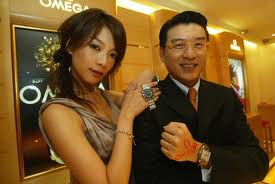
Why would luxury retailers want to ease Chinese visa requirements into the United States? Turns out Chinese women are quickly replacing Americans as the most voracious shoppers on the planet, and Chinese tourists are known for opening their wallets when traveling abroad.
What makes good economic sense for the United States has deep underpinnings in a socioeconomic cycle that has changed Chinese retail culture. In effect, a country that, just a couple decades ago, was seen as a developing Communist bastion and teased for its poor quality "Made in China" gizmos is today becoming a retailer's mecca. And while you still may associate China with knockoff luxury, the real deal is making quite an entrance in the PRC. Luxury goods are coming in with a bang in China in no small part due to the power of the rising Chinese woman. Previously, as in much of the world, she was a housewife who relied on her husband to provide for her. Today, a Chinese woman is not only able to provide for herself, she's able to treat herself to the finer baubles of life, courtesy of drastic development and a consumer culture that places emphasis on showing wealth off. The Fashionomist found this article from The Wall Street Journal (http://online.wsj.com/article/SB10001424052748703864204576315291406475666.html), citing a McKinsey survey citing the innate need of women to be more on trend than men in the growth of luxury shopping amongst Chinese women. What is driving the luxury boom in China? A combination of market and cultural forces are allowing Chinese women to indulge in their inner fashionista:
In two years, China will become ChloƩ's biggest market because of the rise of female shoppers, says president and chief executive Geoffroy de-la-Bourdonnaye. "Women in this country are becoming more independent, more career-oriented, and more powerful in the market," he says.
Seems like retailers are discovering an age-old secret that economists have tirelessly ranted on for time immemorial - the woman that runs the house and work a job is a company's goal for the bottomline. It is through a self-supporting woman that an economy is able to not only succeed but thrive in development. Check this out for proof: Among the 20 wealthiest self-made women, a whopping 11 are Chinese nationals. More astonishing: 153 women are the Chinese equivalent of billionaires.In short, the best way to development? Soccer moms.
Perhaps Sun Ningning, the GlaxoSmithKline sales manager profiled by the article, represents the new Chinese woman best: "There's just something about buying luxury that makes me feel happy."
Well, it's making the world's economy feel quite happy too.
But while we're celebrating the rise of the Chinese woman as economic sword wielder, let's not forget their other halves (http://blogs.wsj.com/scene/2011/06/13/chinese-men-get-their-lux-due-too/). Yes, Chinese men are making a dent on the world economic scene and in the heady infantile Chinese luxury market. Apparently, men are the ones that like to flaunt their newfound wealth off:
“Men are typically the first luxury spenders in emerging markets, as they buy watches and branded accessories as status symbols before they start spending on the women in their lives,” writes Ms. Passariello in her article, noting that after Japan caught the luxury bug in the 1980s it took many years for a young generation of working women to surpass men in spending.
And before you snicker at the man bag, give it respect in China - it is a powerful tool of conveying status in this class-conscious country. Men also spend a considerably larger amount of their paycheck on designer clothing in China compared to women. Surprising? Not really, when considering the fact that China remains a traditional culture that places emphasis on males in the household and their status as breadwinners before women, though that view is beginning to ease slowly.
The Fashionomist's take on this? The Americans and Chinese are double dipping in a little Ricardian dance of sorts - the Chinese practically invented the fast fashion that Americans have come to adore what with the recent recession and newly reduced spending habits, while American lux and keeping up with the Joneses is infiltrating the Chinese strata. A cultural exchange at its best.
*The Fashionomist*
Tuesday, June 21, 2011
Wednesday, May 11, 2011
Namaskar
The Fashionomist, you may have noticed, has been out of commission for some time, due mostly to the dark era in a graduate student's life known as "finals," where one must hide out in the dark, dingy caverns of some forlorn university library staring at graphs and cramming various formulae and trivia to spill out the moment an exam is handed out. After finals, The Fashionomist has been insanely busy packing for a trip to India, a country that is both foreign and familiar to her, as land of her ancestral heritage and immediate cultural vantage point while also being a state that is so intensely opposite and exotic to American values and lifestyle that she can never feel completely at home when there. Eleven years after her last trek to Kolkata, The Fashionomist is going to spend three weeks rediscovering her culture, her family, and her sense of self. Suffice it to say that these three weeks will be a whirlwind of activity that will thoroughly muddle her brain, but The Fashionomist is looking forward to this trip. Not only will it be a long needed/awaited escape from the confines of academia, but it will also help ground the floating sense of self that has inhabited her being this past year.
More importantly for The Fashionomist's dear readers: posts will not be able to continue for the month of May, as The Fashionomist's beloved grandmother has no computer access at her apartment from which to type fashion curiosities from the other side of the planet. Please note that this does not mean that The Fashionomist is disappearing for good. Oh no, no, no. The Fashionomist is passionate about her pet project of extrapolating on the economics of fashion and would like to expand on this hobby of hers when she returns. She promises more posts than have been usual of late, which should be possible due to the generous time availability made possible by summer.
And so The Fashionomist ends her first, last, and only post for the month of May. She will miss you and hopes you have yourself a sweet little break.
Yours until the next fashionomic debate~
*The Fashionomist*
More importantly for The Fashionomist's dear readers: posts will not be able to continue for the month of May, as The Fashionomist's beloved grandmother has no computer access at her apartment from which to type fashion curiosities from the other side of the planet. Please note that this does not mean that The Fashionomist is disappearing for good. Oh no, no, no. The Fashionomist is passionate about her pet project of extrapolating on the economics of fashion and would like to expand on this hobby of hers when she returns. She promises more posts than have been usual of late, which should be possible due to the generous time availability made possible by summer.
And so The Fashionomist ends her first, last, and only post for the month of May. She will miss you and hopes you have yourself a sweet little break.
Yours until the next fashionomic debate~
*The Fashionomist*
Friday, April 29, 2011
Princess For a Day
The Fashionomist is NOT jumping on the bandwagon of fashion blogs drooling over Kate Middleton's (excuse The Fashionomist, Duchess of Cambridge) dress. [If you must know, the lace sleeves have caught her fancy, but the cut is a bit disappointing, particularly from the house of Alexander McQueen]. But the economics behind THE DRESS (as it has come to be known) are amazing.
Yes, to ruin your entire royal fantasy, there is an economics to THE DRESS.
The New York Times recently posted a fascinating article on the copycat process of spitting out replicas of THE DRESS, just in time for spring/summer wedding season (http://www.nytimes.com/2011/04/24/fashion/24knockoff.html?_r=1&emc=eta1). Some designers have decided to simply imagine the design from before and sell dresses based on their conception of what Princess Kate would be wearing. Check out designer Don O'Neill's eerily similar forecast of what the newest lady-in-waiting would don.
But the more intriguing process lies in how quickly information will travel from first viewing of the bride to retail stores.
It's not just designers getting in the trend: fast fashion is jumping the gun and creating designs in time for prom (that big spring event of American teenagers). A three week turnaround is expected from today to being able to shimmy in a ballroom with your fellow high-schoolers donning THE DRESS. David's Bridal is planning on releasing a prototype by the end of the weekend. Internet retailer Light in the Box will have prototype of THE DRESS out tonight and ready to purchase by mid-June. So fear not, fellow Americans - you too can look like a non-Disney princess.
The Fashionomist apologizes for spoiling your good royal fun and dampening your admiration of THE DRESS with economics, but isn't that her job? After all, a fairy-tale wedding will be influencing trends for years to come - it's an economic trend with lasting power. Perhaps the American recession should look into the business of royalty for an economic boost?
Best wishes to William and Kate.
*The Fashionomist*
Post-Edit: It took just 5 hours for THE DRESS to be replicated!
http://royalwedding.yahoo.com/blogs/kate-middleton-wedding-dress-recreated-8467
Yes, to ruin your entire royal fantasy, there is an economics to THE DRESS.
The New York Times recently posted a fascinating article on the copycat process of spitting out replicas of THE DRESS, just in time for spring/summer wedding season (http://www.nytimes.com/2011/04/24/fashion/24knockoff.html?_r=1&emc=eta1). Some designers have decided to simply imagine the design from before and sell dresses based on their conception of what Princess Kate would be wearing. Check out designer Don O'Neill's eerily similar forecast of what the newest lady-in-waiting would don.
But the more intriguing process lies in how quickly information will travel from first viewing of the bride to retail stores.
“When that dress hits, we’ll be right on it,” said Jim Hjelm, a bridal designer in New York. “We’ll be on the computer that afternoon, sending a sketch.” The company’s factory in China will return samples for approval within 24 hours, Mr. Hjelm said. Equipped, like its competitors, with high-tech computer programs, the factory can approximate a design from a sketch or a Web page, with no need to pull apart the seams of an actual garment. “We’ll probably gamble and have a dress or even three styles out before October,” said Mr. Hjelm, for shipping to stores in February. “But there are plenty of people who will have the dress within a day."
Which means, dear reader, should you have the itch to marry in THE DRESS next fall, or perhaps next Saturday suits your schedule better, you can look like a beaming queen-to-be --- and cheaper, to boot.
And therein lies the magic of easy access to information. Think back to the last royal wedding, when Prince Charles and Princess Diana vowed everlasting happiness (or something like that). What did one do in the 1980s in terms of access to information? It was a television spectacle, to be sure. But as a designer, if one desired to create a prototype of the dress and have it released to the public as quickly as possible, the process of sketching, designing, purchasing fabric, pinning, sewing, adjusting, manufacturing, price fixing, retailing, advertising, and selling would take at least a month, if not more. The Internet wasn't there for lightning fast correspondence across the pond, and designers separated from the manufacturing and business aspects of dressmaking had, at best, phones to communicate with. Scanners, email, and smartphones were still Jetson-speak.
The speed of communication, in other words, has made fast fashion possible. It's reduced the cost of clothing for consumers who wish to have the latest fashion, allowing fashion to be broadened in its reach. Even better for consumers is the fact that with the ability to have more input in design (instead of being limited to a certain designer in a certain place due to geographic obstacles, one could have this dress with creative and physical input from across the planet), consumers are getting a better product of better quality. British design will be transmitted to American business fashion markets, where prototypes will be sent to production in China, whose dresses will be flown over the world. The speed of the process and ability to use comparative advantage in bringing about the best product possible is simply astounding.
It's not just designers getting in the trend: fast fashion is jumping the gun and creating designs in time for prom (that big spring event of American teenagers). A three week turnaround is expected from today to being able to shimmy in a ballroom with your fellow high-schoolers donning THE DRESS. David's Bridal is planning on releasing a prototype by the end of the weekend. Internet retailer Light in the Box will have prototype of THE DRESS out tonight and ready to purchase by mid-June. So fear not, fellow Americans - you too can look like a non-Disney princess.
The Fashionomist apologizes for spoiling your good royal fun and dampening your admiration of THE DRESS with economics, but isn't that her job? After all, a fairy-tale wedding will be influencing trends for years to come - it's an economic trend with lasting power. Perhaps the American recession should look into the business of royalty for an economic boost?
Best wishes to William and Kate.
*The Fashionomist*
Post-Edit: It took just 5 hours for THE DRESS to be replicated!
http://royalwedding.yahoo.com/blogs/kate-middleton-wedding-dress-recreated-8467
Saturday, April 16, 2011
Casual Friday
A few days ago, The Fashionomist was digging through her parents shared closet, attempting to discover some new vintage gem to be refashioned into a quirky outfit. Instead, she found hangers upon hangers of her father's ties - striped, spotted, dark, light, silk, cotton, embroidered, printed, and beyond. The Fashionomist remembered her father dressing up for work everyday in a proper pant/shirt/tie get-up, but noticed that trend had disappeared; indeed, her father usually wears slacks and a shirt Monday through Thursday, downgrading to jeans and a polo on Friday. "Does anyone at your company wear ties anymore?" The Fashionomist queried her father. "No," he responded. "Unless we're meeting a client, there's no use for ties."
When did dressing up for work disappear? Isn't work the one place one should be creating an image of professionalism?
In the name of the banquet tonight at The Fashionomist's university's department and the invitation's request that all attendees dress in "business attire, please," (and in the name of avoiding the dreaded microeconomics homework that looms angrily in The Fashionomist's weekend horizon... sigh), The Fashionomist decided to investigate this phenomenon.
Lo and behold, The Wall Street Journal has been wondering the same exact thing (http://online.wsj.com/article/SB10001424052748704013604576246911629008064.html). Well, not exactly, though they look at the fading away of dress codes at fine dining establishments. The people at WSJ link this trend up to President Obama, who did away with George W. Bush's strict code of no "jeans, sneakers, miniskirts, tank tops or flip-flops for visitors" (even dressing up is politicized!). But the restaurant business points instead to the recession. That big cloud of economic doom has meant that restaurants who wish to stay afloat during hard times have had to sacrifice their dress code to attract business. Proof?
"Steve Cuozzo, the New York Post's restaurant critic, said that many formal-attire eateries in Manhattan today 'are so desperate for business they'd probably let Times Square's Naked Cowboy in.'"
The Naked Cowboy? Ouch - that's pretty desperate.
So the economy is a big deal in restaurants. The Fashionomist gets it. But what about the work world? After all:
"The benefits to formal dressing outweigh the negatives. 'You'll look terrific, and miles above those slobs. And you'll get more respect. Formal dress really has social impact. You'll be treated with greater deference than the 45-year-old guy dressed like a rock drummer.'"
Here is a theory The Fashionomist has: It's all about image. Granted, walking down financial plazas in any major metropolitan center will garner you looks if you don't have proper anything on. But, corporate America aside, if you're working for a smaller business or a place that does not require looking tip-top for a potential client, you can get away with, even enhance your prospects, with the casual look. Why? It makes the company look familial, homely even. Forget about the fact that you hate your boss's guts: the image presented by "business casual" is "We take business seriously, but not so seriously that we won't have the occasional pizza party or allow a worker to take care of an ill child." Business casual gives the aura of a company that isn't misguided about priorities and work - a company that is grounded enough to let its employees have a family life and focus on work during work while offering benefits and compassionate understanding for the home and individual. In an economy where the recession is drowning worker morale, giving workers the ease of not dressing uptight and giving a sense of comfort is beneficial for employer and employee - or so the thought goes. And a sense of worker morale may help a company in the long run in terms of productivity and avoiding turnover.
Will the tie ever make a comeback? The Fashionomist sure hopes so - it's a classic finishing touch to menswear. No man ever looked terrible in a tie. Or woman, for that matter.
*The Fashionomist*
When did dressing up for work disappear? Isn't work the one place one should be creating an image of professionalism?
In the name of the banquet tonight at The Fashionomist's university's department and the invitation's request that all attendees dress in "business attire, please," (and in the name of avoiding the dreaded microeconomics homework that looms angrily in The Fashionomist's weekend horizon... sigh), The Fashionomist decided to investigate this phenomenon.
Lo and behold, The Wall Street Journal has been wondering the same exact thing (http://online.wsj.com/article/SB10001424052748704013604576246911629008064.html). Well, not exactly, though they look at the fading away of dress codes at fine dining establishments. The people at WSJ link this trend up to President Obama, who did away with George W. Bush's strict code of no "jeans, sneakers, miniskirts, tank tops or flip-flops for visitors" (even dressing up is politicized!). But the restaurant business points instead to the recession. That big cloud of economic doom has meant that restaurants who wish to stay afloat during hard times have had to sacrifice their dress code to attract business. Proof?
"Steve Cuozzo, the New York Post's restaurant critic, said that many formal-attire eateries in Manhattan today 'are so desperate for business they'd probably let Times Square's Naked Cowboy in.'"
The Naked Cowboy? Ouch - that's pretty desperate.
So the economy is a big deal in restaurants. The Fashionomist gets it. But what about the work world? After all:
"The benefits to formal dressing outweigh the negatives. 'You'll look terrific, and miles above those slobs. And you'll get more respect. Formal dress really has social impact. You'll be treated with greater deference than the 45-year-old guy dressed like a rock drummer.'"
Here is a theory The Fashionomist has: It's all about image. Granted, walking down financial plazas in any major metropolitan center will garner you looks if you don't have proper anything on. But, corporate America aside, if you're working for a smaller business or a place that does not require looking tip-top for a potential client, you can get away with, even enhance your prospects, with the casual look. Why? It makes the company look familial, homely even. Forget about the fact that you hate your boss's guts: the image presented by "business casual" is "We take business seriously, but not so seriously that we won't have the occasional pizza party or allow a worker to take care of an ill child." Business casual gives the aura of a company that isn't misguided about priorities and work - a company that is grounded enough to let its employees have a family life and focus on work during work while offering benefits and compassionate understanding for the home and individual. In an economy where the recession is drowning worker morale, giving workers the ease of not dressing uptight and giving a sense of comfort is beneficial for employer and employee - or so the thought goes. And a sense of worker morale may help a company in the long run in terms of productivity and avoiding turnover.
Will the tie ever make a comeback? The Fashionomist sure hopes so - it's a classic finishing touch to menswear. No man ever looked terrible in a tie. Or woman, for that matter.
*The Fashionomist*
Subscribe to:
Posts (Atom)